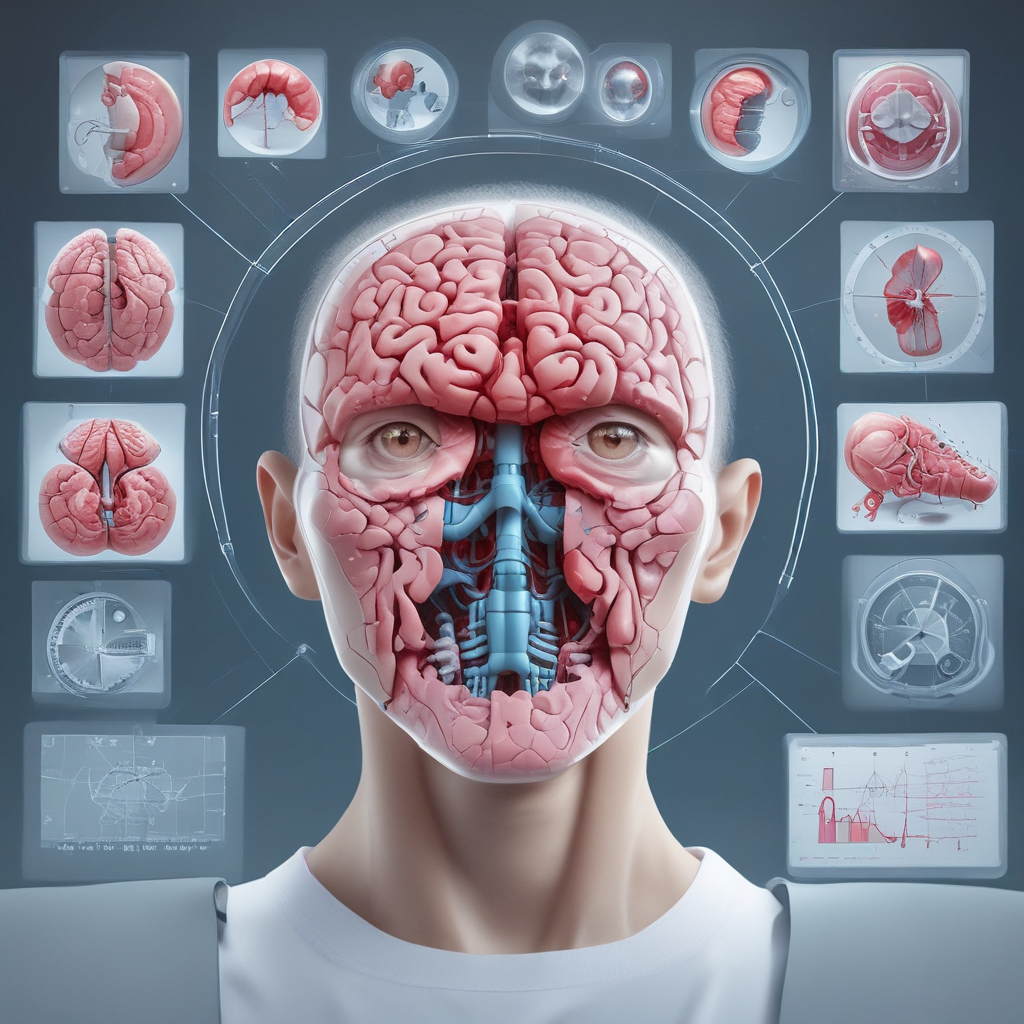
AI Accelerates Stroke Diagnosis, Saving Critical Time in Emergency Care
New research published in the Journal of the American Medical Association (JAMA) demonstrates how artificial intelligence (AI) is revolutionizing the way strokes are diagnosed and treated. In a series of clinical trials, an AI-powered image analysis system was able to identify signs of stroke 50% faster than human radiologists, a finding that could dramatically improve patient outcomes.
The study, led by a team of physicians and computer scientists at the University of California, San Francisco, involved 2,400 patients suspected of having an acute ischemic stroke. The AI system was trained on thousands of brain scans to detect the telltale signs of blockages and bleeding that characterize different stroke types.
"Time is brain when it comes to stroke," explained Dr. Samantha Huang, the study's lead author. "Every minute counts in getting the right treatment, and our results show AI can cut critical diagnosis time in half, giving doctors more opportunity to intervene and save brain tissue."
Currently, stroke diagnosis relies on radiologists manually reviewing CT or MRI scans, a process that can take 30-60 minutes. The AI system, in contrast, was able to provide a preliminary assessment in under 15 minutes, with 95% accuracy in differentiating ischemic from hemorrhagic stroke.
"This is a game-changer for emergency stroke care," said Dr. Huang. "With AI taking on the initial image analysis, radiologists can focus on the most complex cases and doctors can get patients into the appropriate treatment pipeline faster than ever before."
The research team is now working to integrate the AI system into hospital workflows, with plans for a broader multi-site clinical trial in 2026. If the results hold up, it could pave the way for AI-augmented stroke care to become the new standard of practice, potentially saving thousands of lives each year.
"Seeing the direct clinical impact of this AI technology is incredibly gratifying," added Dr. Huang. "It's a prime example of how medical AI, when applied responsibly, can dramatically improve patient outcomes and the overall efficiency of our healthcare system."
Key Takeaways
- AI-powered image analysis cuts stroke diagnosis time by 50% compared to human radiologists
- System demonstrated 95% accuracy in differentiating ischemic from hemorrhagic stroke
- Could enable faster treatment intervention and save brain tissue in acute stroke cases
- Researchers plan broader clinical trial in 2026 to integrate AI into hospital workflows
- Demonstrates potential of responsible medical AI to enhance emergency care and patient outcomes
 AI Cuts Stroke Diagnosis Time by 50% in Clinical Trials - Key Takeaways
Key Takeaways
AI Cuts Stroke Diagnosis Time by 50% in Clinical Trials - Key Takeaways
Key Takeaways
References
-
Miriam Schwarze, Hui Khee Looe, Björn Poppe et al. (2025). "Cluster Dose Prediction in Carbon Ion Therapy: Using Transfer Learning from a Pretrained Dose Prediction U-Net." arxiv. [Link]
-
Yueqi Song, Ketan Ramaneti, Zaid Sheikh et al. (2025). "Agent Data Protocol: Unifying Datasets for Diverse, Effective Fine-tuning of LLM Agents." arxiv. [Link]
-
Xun Liang, Huayi Lai, Hanyu Wang et al. (2025). "Dissecting Role Cognition in Medical LLMs via Neuronal Ablation." arxiv. [Link]
-
Reker D, Blum SM, Steiger C et al. (2019). ""Inactive" ingredients in oral medications.." pubmed. [Link]
-
The Lancet Oncology (2021). "Undruggable KRAS-time to rebrand?." pubmed. [Link]
 AI Cuts Stroke Diagnosis Time by 50% in Clinical Trials - References
References
AI Cuts Stroke Diagnosis Time by 50% in Clinical Trials - References
References