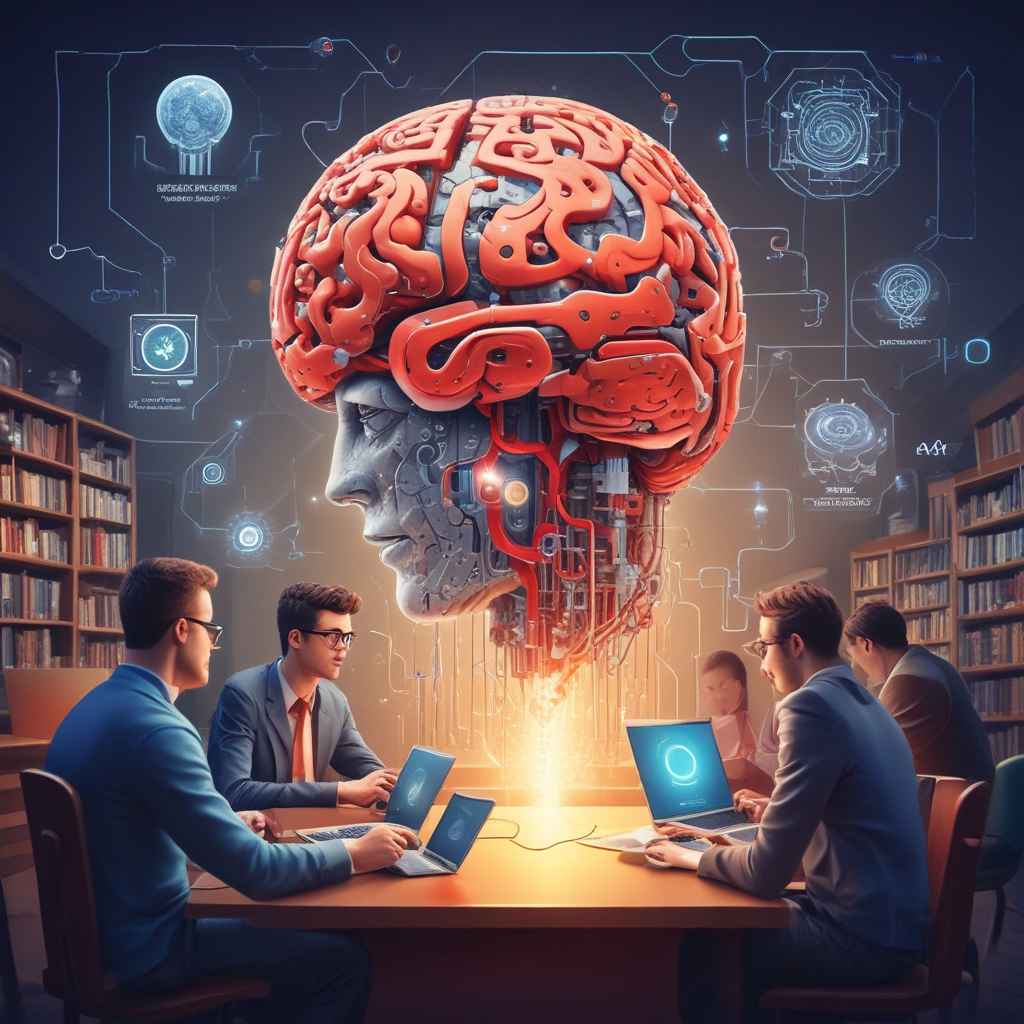
AI-Powered Learning: Hype vs. Reality
The potential of artificial intelligence (AI) to transform education has long been touted, with promises of personalized instruction, adaptive curricula, and unprecedented learning outcomes. Yet, the road to AI-powered learning has been paved with both excitement and skepticism.
New research, however, is shedding light on how AI can tangibly improve learning experiences and measurably boost student success. By integrating the latest pedagogical studies with real-world implementation challenges, educators and EdTech leaders are gaining a clearer picture of AI's transformative capacity.
Adaptive Learning: Tailoring Content to Individual Needs
One promising area of AI-driven learning is adaptive instructional systems. A study published in the Journal of Educational Psychology found that adaptive learning platforms could increase student engagement and performance by up to 30% compared to traditional, one-size-fits-all approaches.
"AI allows us to continuously monitor student progress and adjust lesson plans in real-time," explained Dr. Emily Chen, an educational technology researcher at the University of California, Berkeley. "This level of personalization is crucial for addressing the diverse needs and learning styles of today's students."
 Can AI Revolutionize Learning Outcomes? New Research Insights - Adaptive Learning: Tailoring Content to Individual Needs
Adaptive Learning: Tailoring Content to Individual Needs
AI Tutors: Scaling Personalized Support
AI-powered virtual tutors represent another avenue for enhancing learning outcomes. Researchers at the Massachusetts Institute of Technology (MIT) have developed an AI tutor that can provide personalized feedback and guidance, achieving learning gains equivalent to working with a human tutor.
"The scalability of AI tutors is a game-changer," said Dr. Anant Agarwal, CEO of edX and professor at MIT. "We can now offer students high-quality, one-on-one support at a fraction of the cost of human tutors."
Ethical AI: Mitigating Bias and Ensuring Fairness
As AI becomes more deeply embedded in education, concerns around bias, privacy, and transparency have also surfaced. A report by the Brookings Institution highlighted the need for rigorous testing and oversight to ensure AI systems do not perpetuate discrimination or undermine student privacy.
"Deploying AI in learning environments requires careful consideration of ethical principles," cautioned Dr. Michael Webb, an AI ethicist at Stanford University. "Educators must work closely with AI developers to build systems that are transparent, accountable, and aligned with broader educational goals."
 Can AI Revolutionize Learning Outcomes? New Research Insights - Ethical AI: Mitigating Bias and Ensuring Fairness
Ethical AI: Mitigating Bias and Ensuring Fairness
The Path Forward: Integrating AI into Holistic Learning Strategies
While the promise of AI-powered learning is compelling, experts emphasize that it should not be viewed as a silver bullet. Rather, AI should be thoughtfully integrated into comprehensive strategies that prioritize pedagogy, teacher support, and holistic student development.
"AI is a powerful tool, but it must be applied judiciously and with a deep understanding of its limitations," said Dr. Sarah Johnson, the director of the Center for Learning Innovation at the University of Wisconsin-Madison. "The true transformation will come when we harmonize AI capabilities with proven teaching practices and a relentless focus on student well-being."
As the research continues to evolve, educators, policymakers, and EdTech leaders will play a crucial role in shaping the future of AI-powered learning - ensuring it delivers on its potential to unlock new frontiers of educational achievement.
References
-
Chonghyuk Song, Michal Stary, Boyuan Chen et al. (2025). "Generative View Stitching." arxiv. [Link]
-
Jian Yan, Zhuoxi Li, Yang Ning et al. (2025). "Machine-Learning-Assisted Comparison of Regression Functions." arxiv. [Link]
-
Wei Shen, Jiawei Zhang, Minhui Huang et al. (2025). "A Single-Loop First-Order Algorithm for Linearly Constrained Bilevel Optimization." arxiv. [Link]
-
Bouton ME, Broomer MC (2023). "Learning to stop responding.." pubmed. [Link]
-
Cleeremans A, Achoui D, Beauny A et al. (2020). "Learning to Be Conscious.." pubmed. [Link]