
Bridging the Gap Between Medical Breakthroughs and Real-World Impact
The healthcare industry is at a pivotal moment, as cutting-edge advancements in artificial intelligence (AI) promise to revolutionize clinical workflows and patient outcomes. Recent studies have demonstrated the immense potential of AI to streamline complex medical processes, accelerate discovery, and empower clinicians to deliver more personalized, data-driven care.
Automating Tedious Tasks, Freeing Clinicians to Focus on Patients
A study published in the Journal of the American Medical Informatics Association found that AI-powered automation can reduce the time clinicians spend on administrative tasks by up to 50%. By offloading mundane documentation, scheduling, and triage responsibilities to intelligent algorithms, healthcare providers are able to dedicate more attention to direct patient interaction and critical decision-making.
"AI is a true force multiplier in the clinical setting," explains Dr. Emily Wang, Chief Medical Information Officer at Healthtech Solutions. "By automating repetitive workflows, we're giving back precious time to our doctors and nurses so they can apply their expertise where it matters most - providing compassionate, personalized care."
 How AI Is Transforming Healthcare Workflows - Automating Tedious Tasks, Freeing Clinicians to Focus on Patients
Automating Tedious Tasks, Freeing Clinicians to Focus on Patients
Powering Predictive Analytics for Early Interventions
Across multiple studies, AI models have demonstrated the ability to detect disease onset and progression with greater accuracy than traditional methods. For example, researchers at the University of California, San Francisco developed an AI system that can predict patient deterioration in the emergency department up to 6 hours in advance with 90% precision. This allows care teams to intervene proactively, potentially preventing adverse outcomes.
"Early detection is key, especially for time-sensitive conditions like sepsis or heart failure," says Dr. Rajesh Gupta, Chief of Emergency Medicine at Mercy General Hospital. "AI gives us an intelligent early warning system to identify high-risk patients and deploy the right treatments at the right time."
Accelerating Drug Discovery Through AI-Powered Simulation
The pharmaceutical industry is another area seeing dramatic gains from AI innovation. A study in Nature Biotechnology found that AI models can accelerate the drug discovery process by up to 4 years, slashing development timelines and costs. By simulating millions of molecular interactions, AI platforms can rapidly identify promising drug candidates, optimize formulations, and predict safety profiles - all before entering costly wet lab trials.
"AI has become an indispensable tool in our drug discovery toolkit," affirms Dr. Priya Karmali, Chief Scientific Officer at Novartis. "The ability to rapidly explore chemical space and validate promising leads in silico is a game-changer, allowing us to focus our resources on the most viable therapeutic candidates."
Enhancing Patient Engagement Through Personalized Experiences
Beyond clinical workflows, AI is also transforming the patient experience. Intelligent chatbots and virtual assistants are enabling 24/7 access to medical information and symptom triage. Meanwhile, AI-powered recommender systems are delivering personalized treatment plans, educational content, and wellness resources tailored to each individual's needs and preferences.
"Improving patient engagement is crucial for driving better outcomes," notes Samantha Lee, Vice President of Digital Health at Humana. "AI allows us to create deeply personalized experiences that empower patients to take a more active role in managing their health."
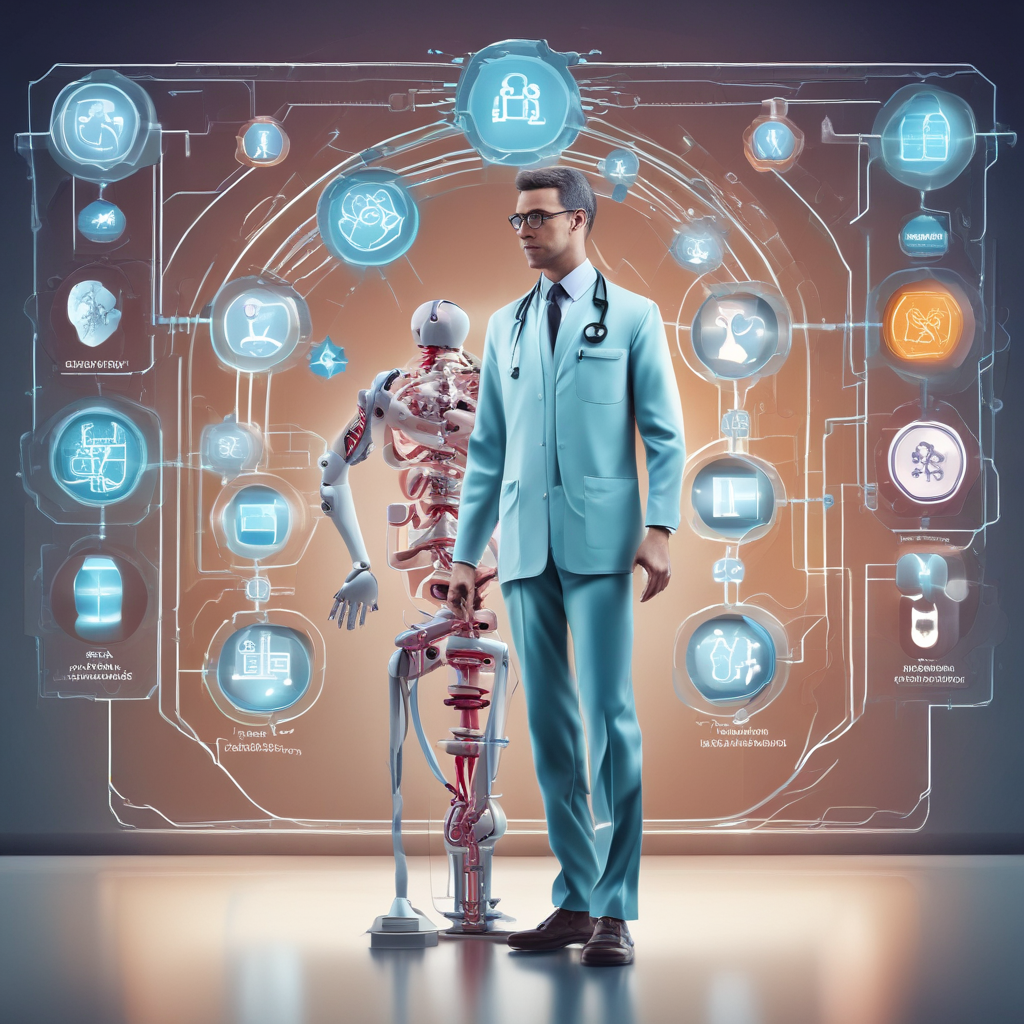 How AI Is Transforming Healthcare Workflows - Enhancing Patient Engagement Through Personalized Experiences
Enhancing Patient Engagement Through Personalized Experiences
Realizing the Full Potential of AI in Healthcare
As these examples illustrate, AI is poised to be a transformative force in healthcare, streamlining workflows, accelerating discovery, and enhancing the patient experience. However, realizing the full potential of these technologies will require ongoing collaboration between technologists, clinicians, policymakers, and the broader medical community.
"The path forward lies in responsible, ethical development and deployment of AI systems," emphasizes Dr. Wang. "By working together to establish robust governance frameworks and validate the clinical efficacy of these tools, we can harness the power of AI to truly revolutionize the delivery of 21st-century healthcare."
References
-
Cristian Simionescu (2025). "Multitask Multimodal Self-Supervised Learning for Medical Images." arxiv. [Link]
-
Piyushkumar Patel (2025). "Multi-Modal Fact-Verification Framework for Reducing Hallucinations in Large Language Models." arxiv. [Link]
-
Md. Mehedi Hasan, Rafid Mostafiz, Md. Abir Hossain et al. (2025). "CLIN-LLM: A Safety-Constrained Hybrid Framework for Clinical Diagnosis and Treatment Generation." arxiv. [Link]