
The Rise of AI-Powered Software Solutions
As artificial intelligence (AI) continues to advance, its impact on the enterprise software landscape is becoming increasingly profound. Generative AI models, such as large language models (LLMs), are revolutionizing how businesses develop, deploy, and interact with their software systems.
Automating Software Development with AI
One of the most transformative applications of generative AI in software is the ability to automate various stages of the development lifecycle. AI-powered code generation tools can rapidly produce functional code, saving developers time and effort. These tools leverage LLMs trained on vast code repositories to understand context, syntax, and best practices, allowing them to generate production-ready code with minimal human input.
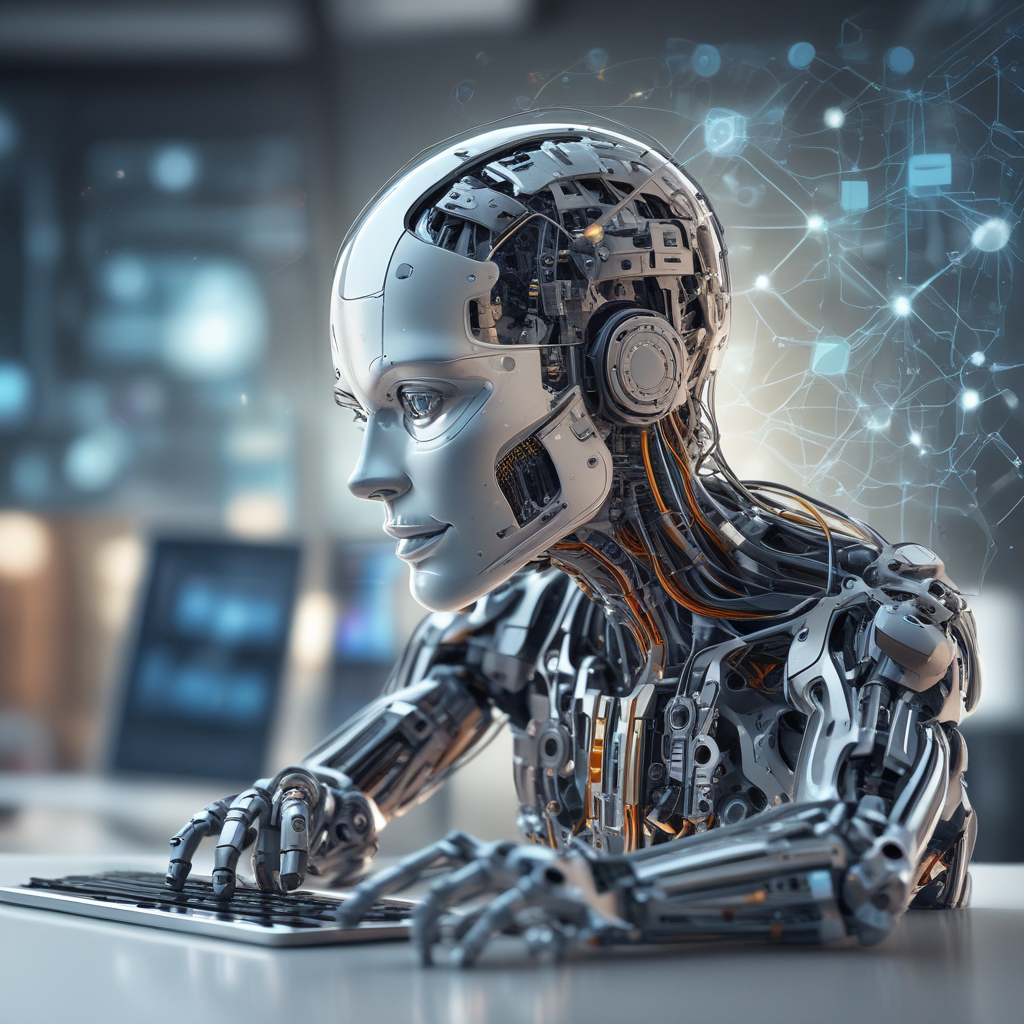 How Generative AI Transforms Enterprise Software - Automating Software Development with AI
Automating Software Development with AI
Enhancing Software Capabilities with AI
Beyond code generation, generative AI is also being integrated into software products to enhance user experiences and capabilities. AI-powered chatbots and virtual assistants can provide intelligent, natural language-based interfaces for customer support, task automation, and knowledge retrieval. Generative models can also generate visual assets, such as images and videos, to complement software applications.
Challenges and Considerations
As enterprise adoption of generative AI in software grows, organizations must navigate important considerations, such as data privacy, model bias, and the ethical implications of AI-generated content. Rigorous testing, robust governance frameworks, and transparent communication with users are crucial to ensure the responsible and effective deployment of these technologies.
 How Generative AI Transforms Enterprise Software - Challenges and Considerations
Challenges and Considerations
The Future of AI-Driven Software
The integration of generative AI into enterprise software is poised to accelerate, unlocking new levels of productivity, creativity, and customer engagement. By embracing these transformative technologies, businesses can stay ahead of the curve, streamline operations, and deliver innovative, AI-powered solutions that meet the evolving needs of their customers.
References
-
Qiushi Sun, Jingyang Gong, Yang Liu et al. (2025). "JanusCoder: Towards a Foundational Visual-Programmatic Interface for Code Intelligence." arxiv. [Link]
-
Joran Leest, Ilias Gerostathopoulos, Patricia Lago et al. (2025). "Tracing Distribution Shifts with Causal System Maps." arxiv. [Link]
-
Lucrezia Berghenti, Elisa Damiani, Margherita Marsili et al. (2025). "fair_data.py: implementing FAIR data compliance in Tribchem." arxiv. [Link]
-
(2014). "Software with impact.." pubmed. [Link]
-
Kamal J, Zargaran D, Zargaran A et al. (2024). "Esthetic Clinic Management Software-Can we improve patient safety?." pubmed. [Link]