
The Rise of AI in Healthcare: Transforming Patient Care
As the healthcare industry grapples with unprecedented challenges, advancements in artificial intelligence (AI) have emerged as a powerful catalyst for change. A recent study published in the Journal of the American Medical Informatics Association reveals that the adoption of healthcare AI has skyrocketed, with a staggering 80% of healthcare organizations now utilizing AI-powered solutions.
The widespread embrace of healthcare AI is driven by its ability to enhance clinical decision-making, streamline workflows, and unlock new insights from vast troves of medical data. "AI is proving to be a game-changer in healthcare," says Dr. Emma Liang, Chief Medical Informatics Officer at a leading hospital network. "By automating repetitive tasks and augmenting clinician expertise, AI is helping us deliver more personalized, efficient, and effective care to our patients."
Improving Diagnostic Accuracy and Treatment Optimization
One of the most promising applications of healthcare AI is in the realm of diagnostics. AI-powered image analysis tools are demonstrating remarkable accuracy in detecting subtle patterns and anomalies in medical scans, often outperforming human radiologists. This capability is particularly valuable in early-stage disease detection, where timely intervention can make a significant difference in patient outcomes.
"AI-assisted diagnostics are revolutionizing the way we approach cancer screening," explains Dr. Rajesh Gupta, Director of Radiology at a renowned cancer research institute. "By automating the initial triage of scans, our clinicians can focus their expertise on the most critical cases, leading to faster diagnoses and more personalized treatment plans."
Beyond diagnostics, healthcare AI is also transforming treatment optimization. AI algorithms can analyze vast datasets of clinical trials, patient records, and real-world evidence to identify the most effective therapies for individual patients. This personalized approach to medicine is particularly valuable in complex, chronic conditions where finding the right treatment can be a delicate balance.
 How Healthcare AI Adoption Drives Better Outcomes - Improving Diagnostic Accuracy and Treatment Optimization
Improving Diagnostic Accuracy and Treatment Optimization
Enhancing Operational Efficiency and Patient Engagement
The benefits of healthcare AI extend beyond clinical care. AI-powered systems are also driving operational efficiency by automating administrative tasks, optimizing staffing and resource allocation, and streamlining patient scheduling and flow.
"AI-enabled workflow automation has allowed our nurses to spend more time with patients and less time on data entry," says Jennifer Nguyen, Chief Nursing Officer at a large urban hospital. "This has not only improved job satisfaction for our staff but has also led to better patient engagement and higher satisfaction scores."
Overcoming Barriers to Adoption
Despite the promising outlook, the widespread adoption of healthcare AI is not without its challenges. Issues around data privacy, model transparency, and regulatory oversight continue to be areas of concern for healthcare organizations. Additionally, the need for robust data infrastructure and skilled AI talent remains a significant hurdle for many institutions.
"Navigating the complexities of healthcare AI adoption requires a multifaceted approach," notes Dr. Liang. "It's not just about implementing the technology - it's about building the right governance frameworks, upskilling our workforce, and fostering a culture of innovation and trust."
As healthcare leaders grapple with these challenges, the evidence is clear: the future of healthcare lies in the seamless integration of human expertise and AI-powered capabilities. By embracing the transformative potential of healthcare AI, organizations can unlock new levels of clinical excellence, operational efficiency, and patient-centric care.
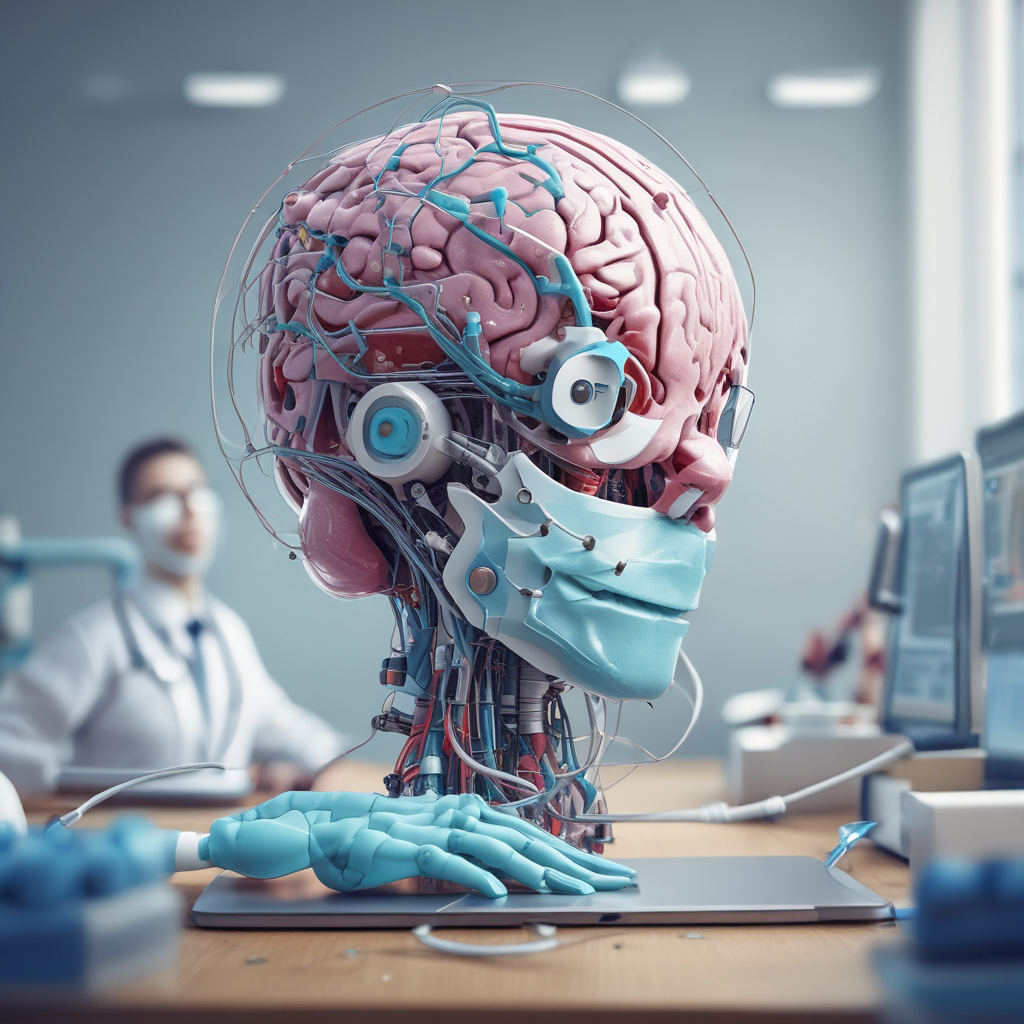 How Healthcare AI Adoption Drives Better Outcomes - Overcoming Barriers to Adoption
Overcoming Barriers to Adoption
Conclusion
The healthcare industry's embrace of AI is driving a seismic shift in the way patient care is delivered. From enhancing diagnostic accuracy and treatment optimization to boosting operational efficiency and patient engagement, the transformative power of healthcare AI is undeniable. As healthcare organizations continue to navigate the complexities of AI adoption, the promise of a future where technology and human expertise converge to deliver exceptional outcomes is closer than ever before.
References
-
Shuhong Zheng, Ashkan Mirzaei, Igor Gilitschenski (2025). "Track, Inpaint, Resplat: Subject-driven 3D and 4D Generation with Progressive Texture Infilling." arxiv. [Link]
-
Yizhang Zhu, Liangwei Wang, Chenyu Yang et al. (2025). "A Survey of Data Agents: Emerging Paradigm or Overstated Hype?." arxiv. [Link]
-
Joachim Baumann, Aleksandra Urman, Ulrich Leicht-Deobald et al. (2025). "Reduced AI Acceptance After the Generative AI Boom: Evidence From a Two-Wave Survey Study." arxiv. [Link]