
Leveling Up Game AI with Reinforcement Learning
In the rapidly evolving world of video games, developers are constantly seeking new ways to create more immersive, adaptive, and engaging experiences for players. One revolutionary technology that is transforming the landscape of game AI is reinforcement learning (RL).
RL, a subset of machine learning, is a powerful technique that enables AI agents to learn optimal behaviors through trial-and-error interactions with their environments. Unlike traditional rule-based game AI, RL-powered systems can dynamically adapt to player actions, react to unexpected scenarios, and exhibit emergent behaviors that can breathe new life into virtual worlds.
Unlocking Dynamic NPC Behaviors
One of the most exciting applications of RL in game development is the creation of non-player characters (NPCs) that can learn and evolve in real-time. By training RL models on vast datasets of player interactions and game events, developers can imbue NPCs with the ability to make intelligent decisions, form unique personalities, and respond organically to player inputs.
"Reinforcement learning allows us to create NPCs that don't just follow pre-programmed scripts," explains Dr. Kai-Fu Lee, a leading expert in AI and game design. "These agents can learn from their experiences, experiment with different strategies, and develop nuanced behaviors that make them feel more lifelike and unpredictable."
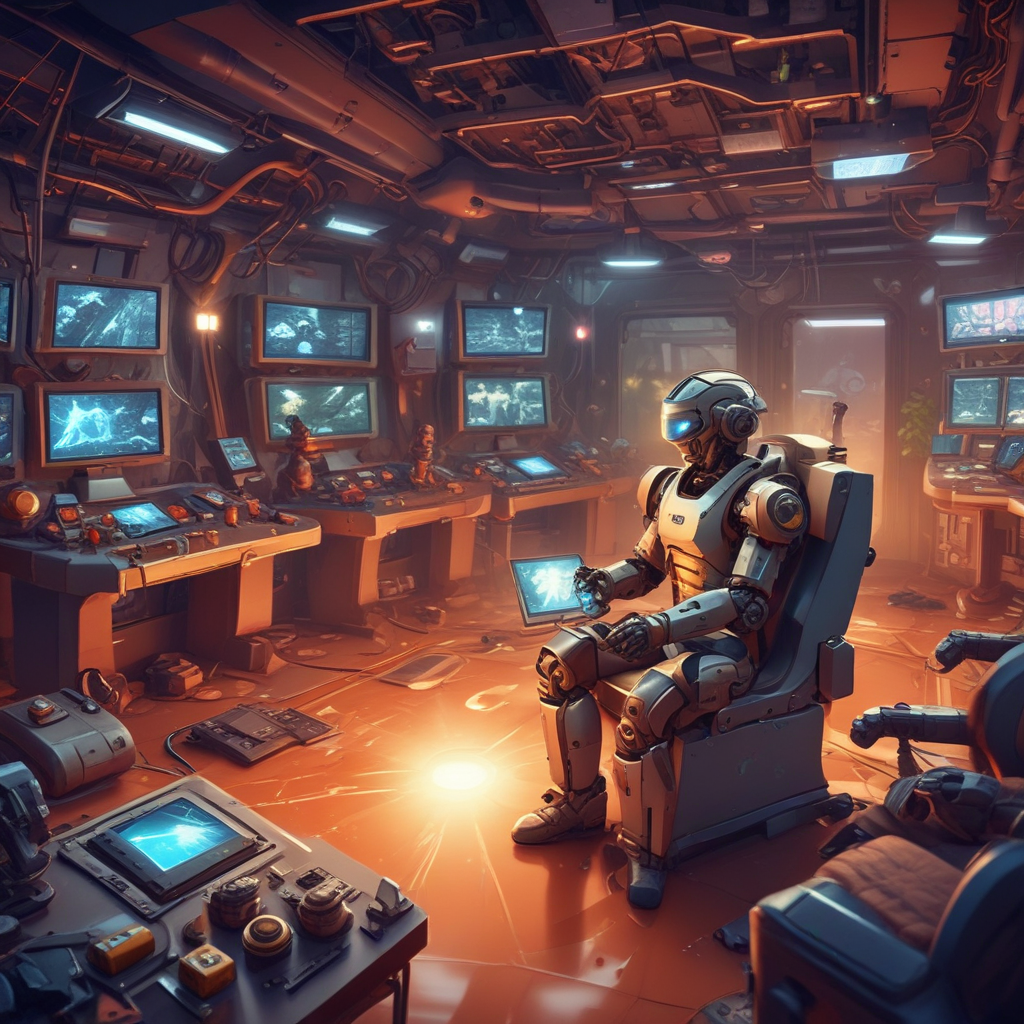 How Reinforcement Learning Fuels the Future of Game AI - Unlocking Dynamic NPC Behaviors
Unlocking Dynamic NPC Behaviors
Optimizing Gameplay Balance and Progression
Beyond NPC behaviors, RL techniques are also being leveraged to fine-tune game mechanics and player progression systems. By modeling player behaviors and preferences using RL, developers can dynamically adjust difficulty levels, reward schedules, and other game parameters to ensure an optimal, personalized experience for each individual player.
"Imagine a first-person shooter where the enemy AI adapts to your playstyle, becoming more challenging as you improve, but never overwhelming you," says Dr. Natalia Hernandez, a researcher at the University of California, Berkeley. "That's the kind of adaptive, player-centric experience that reinforcement learning can enable."
Emerging Trends and Future Possibilities
As the field of game AI continues to evolve, experts anticipate that reinforcement learning will play an increasingly central role. From the development of truly intelligent, self-learning NPCs to the creation of adaptive, personalized gameplay experiences, the potential of RL in the gaming industry is vast and inspiring.
"We're just scratching the surface of what's possible," says Dr. Lee. "As reinforcement learning algorithms become more sophisticated and our computational power continues to grow, I believe we'll see game AI that can rival and even surpass human-level intelligence and creativity. The future of interactive entertainment is brighter than ever."
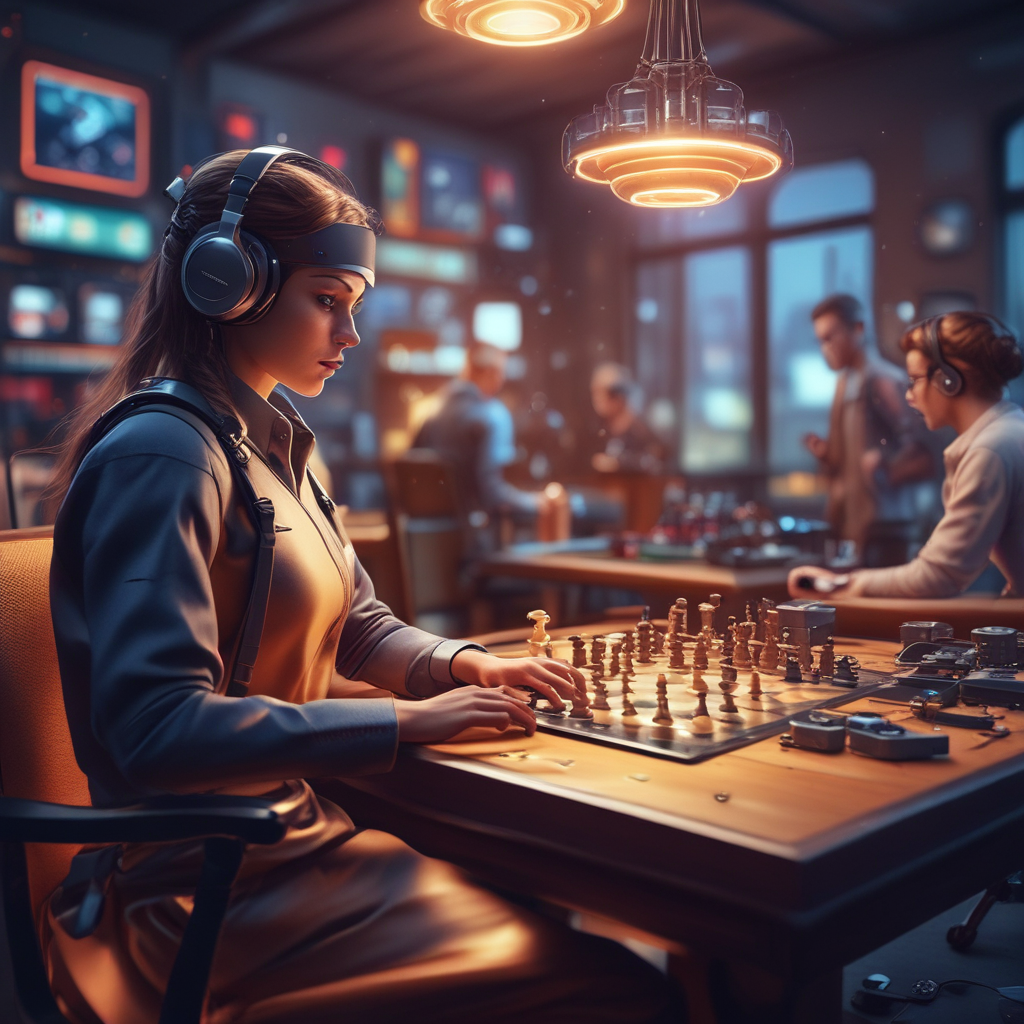 How Reinforcement Learning Fuels the Future of Game AI - Emerging Trends and Future Possibilities
Emerging Trends and Future Possibilities
References
-
P. Christiano, Jan Leike, Tom B. Brown et al. (2017). "Deep Reinforcement Learning from Human Preferences." semantic-scholar. [Link] (3946 citations)
-
Shicong Cen, Yuejie Chi (2023). "Global Convergence of Policy Gradient Methods in Reinforcement Learning, Games and Control." semantic-scholar. [Link] (1 citations)
-
Yujia Zhang, Xiaoyang Wu, Yixing Lao et al. (2025). "Concerto: Joint 2D-3D Self-Supervised Learning Emerges Spatial Representations." arxiv. [Link]
-
Yichi Zhang, Alex Schwing, Zhizhen Zhao (2025). "Variational Masked Diffusion Models." arxiv. [Link]
-
Shuhong Zheng, Ashkan Mirzaei, Igor Gilitschenski (2025). "Track, Inpaint, Resplat: Subject-driven 3D and 4D Generation with Progressive Texture Infilling." arxiv. [Link]