NVIDIA Omniverse Simulation Revolutionizes Gaming Development and Beyond
NVIDIA Omniverse simulation is transforming how developers create digital experiences, from manufacturing automation to immersive gaming environments. This powerful platform combines real-time physics simulation with cutting-edge visualization tools, enabling creators to build sophisticated nvidia omniverse digital twins that bridge virtual and physical worlds.
The platform's impact extends far beyond traditional gaming, powering everything from robotic training systems to fusion power plant modeling. Recent research demonstrates Omniverse's versatility across multiple industries, positioning it as a cornerstone technology for next-generation simulation environments.
Industrial Applications Drive Gaming Innovation
Manufacturing systems are leveraging NVIDIA Omniverse for complex multi-step operations that directly inform gaming AI development. According to research on "Application of Reinforcement Learning to UR10 Positioning for Prioritized Multi-Step Inspection in NVIDIA Omniverse," sequential operations in manufacturing mirror the decision-making processes needed in advanced gaming AI. The study tested state-of-the-art reinforcement learning algorithms including DDPG, TD3, TRPO, and PPO within the Isaac Sim environment, with TRPO demonstrating superior performance for accuracy in complex positioning tasks.
This cross-pollination between industrial simulation and gaming creates opportunities for more sophisticated NPC behavior and environmental interactions. When your Xbox loads a game with intelligent AI opponents, the underlying technology often shares DNA with these industrial applications.
The real-time physics simulation gaming capabilities emerge from this industrial foundation. Manufacturing robots navigating dynamic environments require the same computational precision that makes virtual worlds feel authentic and responsive.
Digital Twins Transform Virtual World Creation
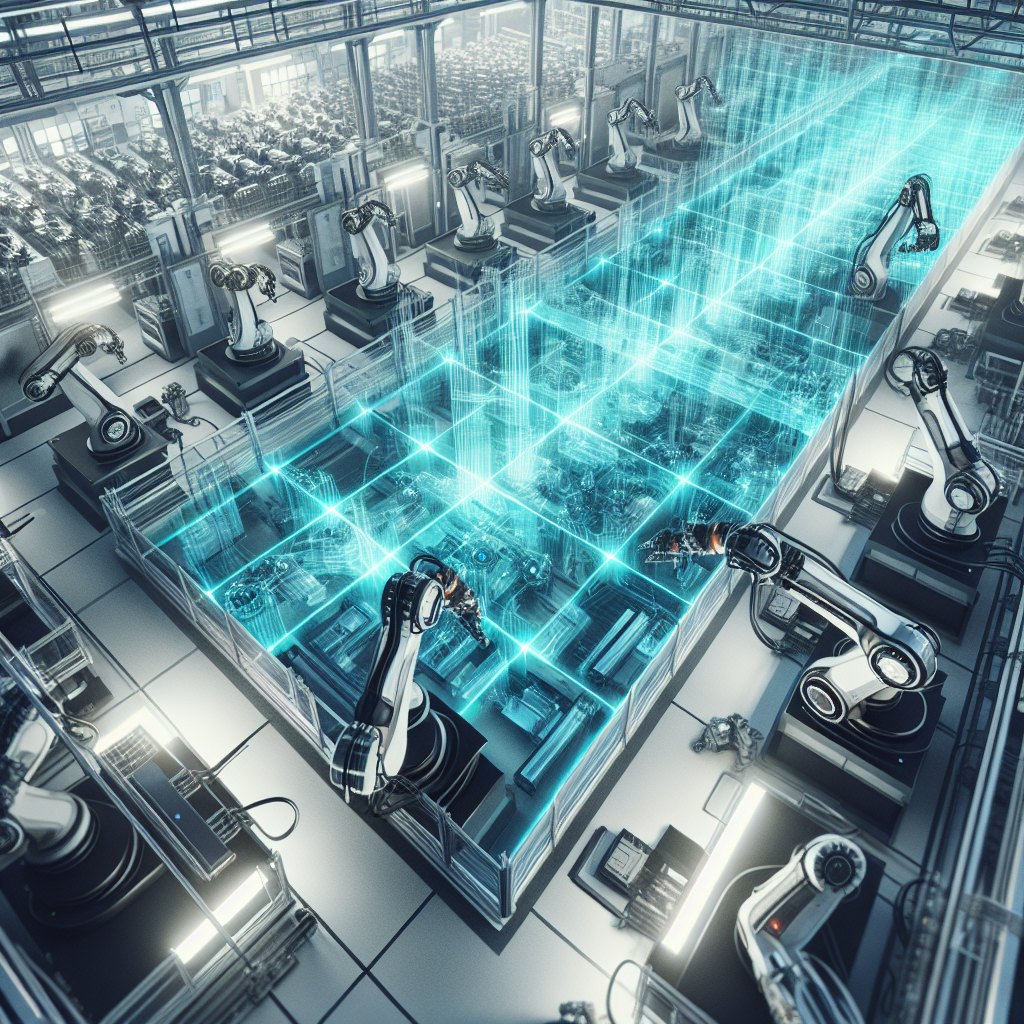 NVIDIA Omniverse digital twins enable real-time physics simulation, transforming how studios develop complex industrial
The concept of nvidia omniverse digital twins represents a paradigm shift in how virtual environments are conceived and built. Research on "Visualizing digital twins of fusion power plants using NVIDIA Omniverse" reveals how complex systems like tokamak reactors become fully interactive virtual replicas. These digital twins integrate computer-aided design models, simulation data, and material properties into Omniverse, creating comprehensive environments that respond realistically to user interactions.
For gaming applications, this means metaverse game engine development can now incorporate real-world physics and material behaviors with unprecedented accuracy. Instead of approximating how objects should behave, developers can simulate actual material properties and environmental conditions.
The fusion power plant research demonstrates Omniverse's capability to handle massive datasets and complex simulations in real-time. Global fusion projects like ITER, STEP, and CFETR rely on these visualization tools to optimize design and operational workflows—the same computational power that enables vast, persistent gaming worlds.
Advanced Robotics Enhance Gaming AI
 NVIDIA Omniverse digital twins enable developers to create hyper-realistic virtual environments with real-time physics s
Autonomous navigation research within NVIDIA Omniverse directly improves gaming experiences. The study "Simulation-To-Reality Hyperparameter Optimization of MPPI Controllers via Bayesian Optimization in NVIDIA Omniverse Isaac Sim" showcases how Model Predictive Path Integral control can be optimized using high-fidelity digital twins. This automated hyperparameter tuning significantly enhances trajectory smoothness and reduces computational overhead.
These advances translate into smarter NPC pathfinding and more believable character movement in games. When you encounter enemies that navigate complex terrain naturally or allies that coordinate effectively, the underlying algorithms often stem from this robotics research.
The experimental validation confirmed strong consistency between simulation-optimized parameters and real-world performance, proving that virtual training environments can produce genuine behavioral improvements.
Consumer-Grade Creation Tools Democratize Development
Accessibility remains crucial for widespread adoption of advanced simulation tools. Research on "Creating Immersive Flight Simulators Using NVIDIA Omniverse and X-Plane" addresses the challenges beginners face when creating immersive experiences without extensive programming knowledge. The study developed practical recommendations for optimizing lighting, adjusting textures, and ensuring appropriate model scaling for comfortable VR experiences.
This democratization of development tools means indie gaming studios can access the same simulation capabilities previously reserved for major developers. Using consumer devices and intuitive interfaces, creators can build sophisticated virtual environments that compete with AAA productions.
The integration of AI-enhanced digital twin creation further lowers barriers to entry. Research on "AI-Enhanced Creation of Digital Twins from iPhone LiDAR" demonstrates how consumer devices like the iPhone 14 Pro Max can capture LiDAR point clouds and RGB images for photorealistic reconstructions in NVIDIA Omniverse.
The Future of Simulation Gaming
NVIDIA Omniverse simulation represents more than just another game engine—it's a comprehensive platform for creating intelligent, responsive virtual worlds. The convergence of industrial simulation, robotics research, and consumer accessibility creates unprecedented opportunities for gaming innovation.
As these technologies mature, expect gaming experiences that blur the lines between simulation and reality. Your virtual worlds will understand physics as accurately as the real world, populated by AI characters that behave with genuine intelligence, all built using tools accessible to creators at every level.
The research trajectory suggests we're approaching a future where the question isn't whether a game can simulate something realistically, but rather what aspects of reality developers choose to emphasize in their virtual creations.
Sources
- Fouad Bahrpeyma, Abishek Sunilkumar, Dirk Reichelt – "Application of Reinforcement Learning to UR10 Positioning for Prioritized Multi-Step Inspection in NVIDIA Omniverse" (2023)
- Nitesh Bhatia, Rui Costa, S. Pamela et al. – "Visualizing digital twins of fusion power plants using NVIDIA Omniverse" (2025)
- Maximilian Ruhe, Kathrin Alba, M. Kipfmueller et al. – "Simulation-To-Reality Hyperparameter Optimization of MPPI Controllers via Bayesian Optimization in NVIDIA Omniverse Isaac Sim" (2025)
- Daniela Rodrigues, Matheus Demetrescu, Fábio Sandrin et al. – "Creating Immersive Flight Simulators Using NVIDIA Omniverse and X-Plane: Guidelines for Beginner Designers" (2025)
- Kamran Gholizadeh HamlAbadi, M. Vahdati, Haiwei Dong et al. – "AI-Enhanced Creation of Digital Twins from iPhone LiDAR for Immersive XR Experiences in NVIDIA Omniverse" (2025)