
Siemens AI-Rad Companion Transforms Radiology Workflows with Automated Imaging Analysis
The Siemens AI-Rad Companion is revolutionizing radiology departments by automating time-consuming post-processing tasks that have traditionally required hours of manual work. This cloud-based radiology AI assistant software addresses a critical bottleneck in medical imaging where radiologists spend significant time on repetitive tasks rather than complex diagnostic analysis.
Comprehensive Multi-Modality Automation Platform
According to Siemens Healthineers, AI-Rad Companion functions as "a family of AI-powered, cloud-based workflows that automate post-processing of imaging datasets to reduce repetitive tasks and enhance diagnostic precision." The platform supports multiple imaging modalities including chest CT, brain MR, prostate MR, chest X-ray, and specialized Organs RT modules for radiation therapy planning.
The system's clinical imaging workflow automation capabilities extend across various anatomical regions. Research published on semanticscholar.org evaluated AI-Rad Companion alongside six other AI-based auto-contouring systems across 42 clinical cases, finding that "each tested AI system was able to produce comparable contours to the experts' contours of organs at risk which can potentially be used for clinical use."
Performance Metrics and Clinical Validation
Performance data reveals impressive capabilities for chest X-ray automated detection. As reported by aicerts.ai, the system demonstrates "93% lung nodule sensitivity" in chest imaging applications. This high sensitivity rate addresses a critical clinical need, as lung nodule detection requires meticulous attention to detail that can benefit significantly from AI assistance.
The automation extends beyond detection to quantitative analysis. AI-Rad Companion performs organ segmentation and measurements automatically, generating structured reports that integrate seamlessly into existing reading workflows through DICOM compatibility.
Integration Challenges and Deployment Flexibility
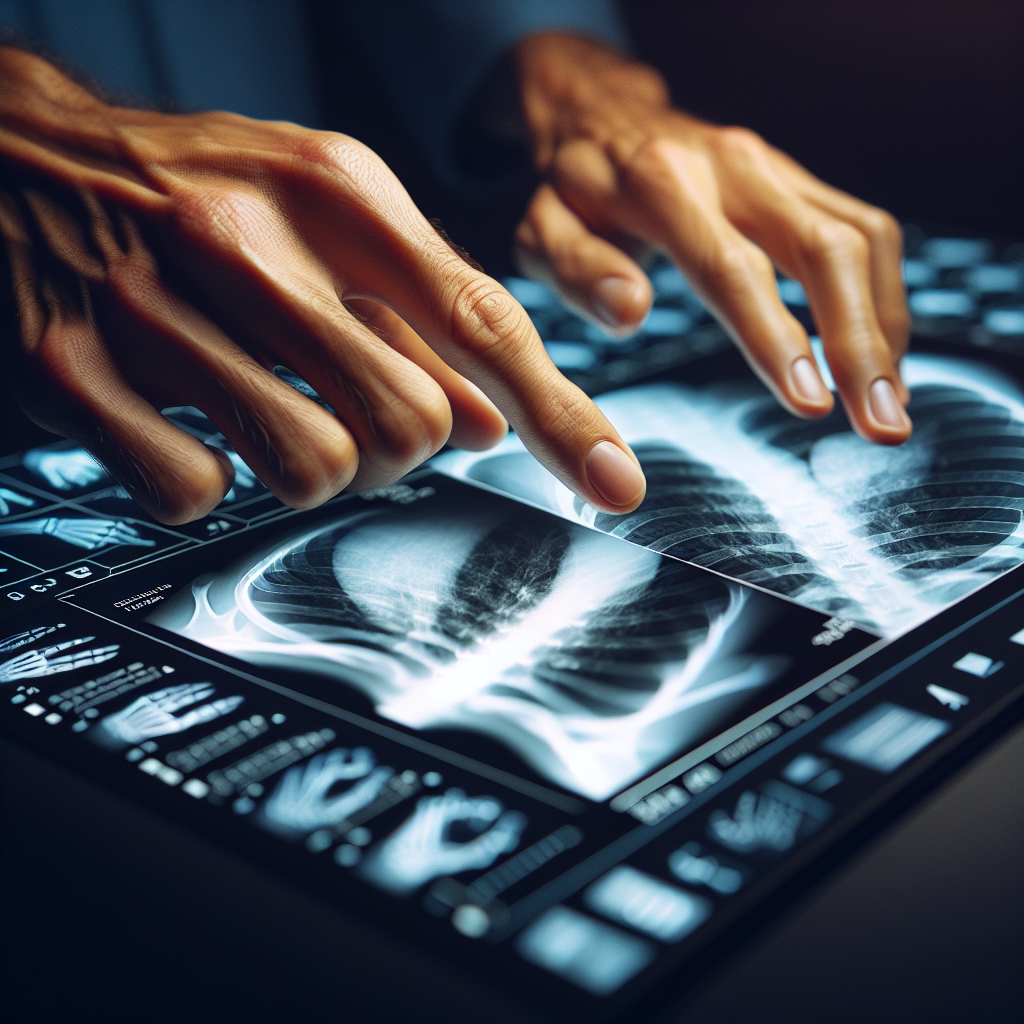 Siemens AI-Rad Companion streamlines radiology workflows through automated chest X-ray detection and multi-modality anal
While the technology shows promise, implementation considerations remain important. The semanticscholar.org study noted "reduced performance of AI systems in the case of small and complex anatomical structures," emphasizing that "it is still essential to review each contour produced by AI systems for clinical uses."
Siemens addresses deployment flexibility through both cloud and edge options. The cloud-based architecture enables automatic updates via the teamplay platform, ensuring radiologists access the latest algorithmic improvements without manual system maintenance.
| Deployment Model | Key Features | Clinical Benefits |
|---|---|---|
| Cloud-based | Automatic updates via teamplay | Latest AI algorithms, reduced IT burden |
| Edge deployment | Local processing | Reduced latency, data privacy control |
| Hybrid approach | Selective cloud/edge usage | Optimized for specific workflow needs |
Industry Context and Future Directions
At RSNA 2025, Siemens Healthineers positioned AI-Rad Companion within their broader Optiq AI imaging chain, as reported by itnonline.com. This integration represents part of "AI's role in delivering higher quality low-dose images for precise procedures," extending the platform's utility beyond traditional diagnostic imaging into interventional applications.
The multi-vendor evaluation approach highlighted in the semanticscholar.org research demonstrates the maturing AI contouring market. While no single system showed "overall superior performance over other software in lung, breast, pelvis and abdomen cases," the comparative analysis validates AI-Rad Companion's competitive positioning among established solutions.
Clinical Impact and Adoption Considerations
The primary value proposition centers on time savings and consistency improvement. Manual organ-at-risk contouring has historically been "time-consuming and subject to inter-observer variability," according to the research evaluation. AI-Rad Companion addresses both challenges by automating repetitive segmentation tasks while maintaining clinical accuracy standards.
Integration with existing radiology information systems through DICOM structured reports ensures compatibility with established workflows. However, the requirement for radiologist review, particularly for complex anatomical structures, maintains the essential human oversight component in clinical decision-making.
As healthcare systems evaluate AI implementation strategies, AI-Rad Companion represents a pragmatic approach to radiology automation—enhancing efficiency while preserving diagnostic quality through combined artificial intelligence and clinical expertise.
Sources
- Young Woo Kim, S. Biggs, E. C. Claridge Mackonis – "Investigation on performance of multiple AI-based auto-contouring systems in organs at risks (OARs) delineation" (2024)
- aicerts.ai – "Radiology AI Workflow: Siemens AI-Rad Companion Sets New Pace" (2026)
- Siemens Healthineers – "AI-Rad Companion - Siemens Healthineers USA" (2026)
- ITN Online – "Siemens Healthineers to Showcase AI-Powered Imaging Chain ..." (2025)