
Stroke Imaging AI Transforms Emergency Medicine with Rapid Diagnosis and Treatment Decisions
Emergency departments are experiencing a technological revolution as stroke imaging AI systems demonstrate remarkable improvements in patient outcomes and treatment efficiency. Recent implementations across healthcare systems show these artificial intelligence platforms are not just experimental tools, but operational systems processing thousands of cases annually while significantly increasing life-saving interventions.
Revolutionary AI Platforms Enter Clinical Practice
Georgetown University Medical Center has launched AStrID, a groundbreaking AI-driven brain imaging platform that automatically identifies stroke type and location in MRI images. According to Georgetown University Medical Center, this sophisticated system processes approximately 5,000 acute stroke cases annually, representing a substantial volume that demonstrates the platform's scalability in real-world clinical environments.
The AStrID platform extends beyond immediate diagnosis, enabling researchers to identify stroke survivors for clinical trials based on specific stroke characteristics. This dual functionality addresses both urgent patient care needs and longer-term research initiatives that could advance stroke treatment protocols. The system also helps detect stroke health disparities, providing valuable epidemiological insights that could inform public health strategies.
NHS Implementation Delivers Dramatic Treatment Improvements
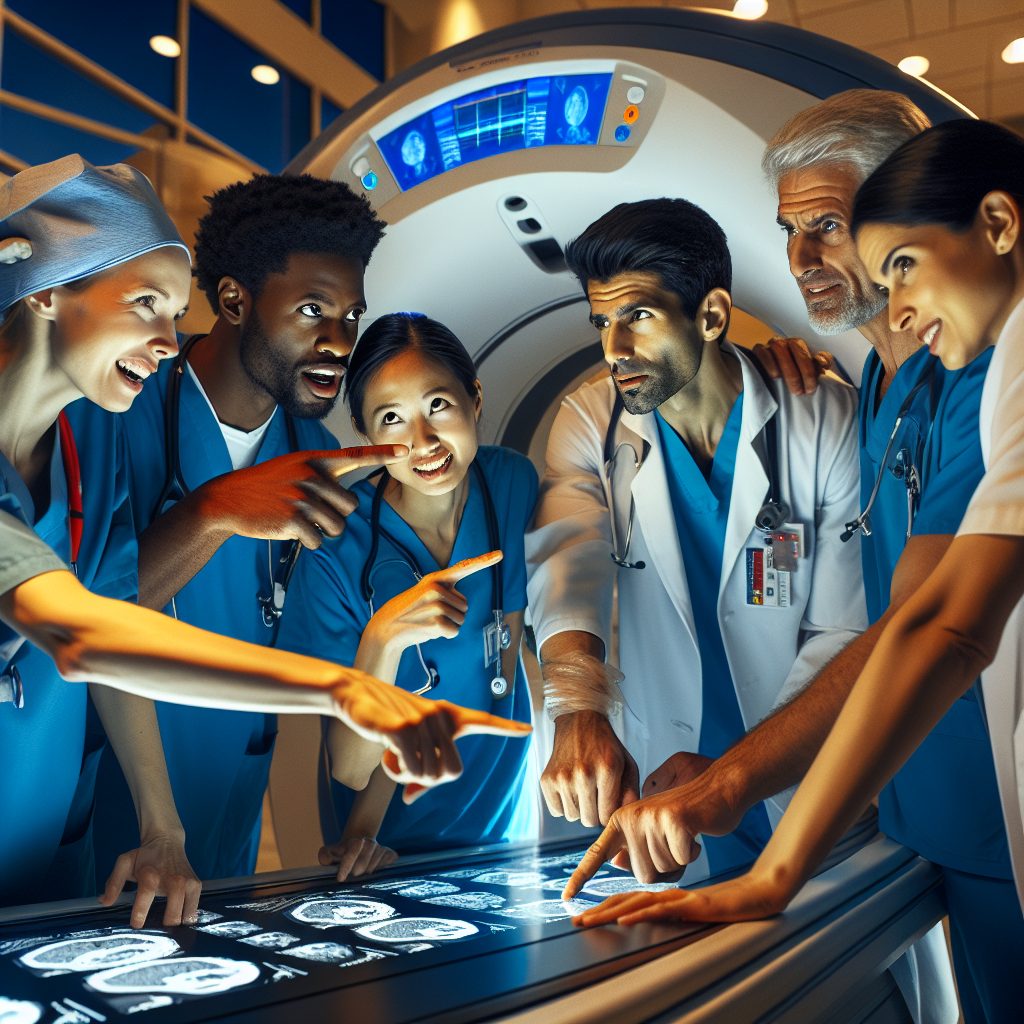 Stroke imaging AI accelerates acute ischemic stroke detection in emergency departments, enabling faster treatment decisi
A large-scale prospective observational study across 26 NHS hospitals in England revealed the transformative impact of AI stroke imaging software implementation. The Brainomix 360 Stroke system, evaluated in this comprehensive study, produced remarkable results that have significant implications for acute ischemic stroke detection protocols.
According to the study published on PubMed, results showed a 100% relative increase in endovascular thrombectomy rates at evaluation sites. This doubling of intervention rates represents a critical advancement, as endovascular thrombectomy is a time-sensitive procedure that can dramatically improve outcomes for patients with large vessel occlusions. The research demonstrated that AI software use was associated with increased likelihood of appropriate stroke treatment, suggesting these systems help clinicians make more accurate and timely treatment decisions.
The NHS implementation provides compelling evidence that AI-powered CT scan analysis and advanced neuroimaging machine learning diagnosis can be successfully integrated into existing healthcare workflows without disrupting emergency department operations.
Natural Language Processing Enhances Diagnostic Accuracy
 Stroke imaging AI accelerates acute ischemic stroke detection, enabling NHS clinicians to initiate critical treatment wi
Beyond traditional imaging analysis, researchers are exploring how artificial intelligence can extract valuable diagnostic information from radiologist reports. A study published in Frontiers in Neurology demonstrates that automated extraction of stroke phenotypes from both imaging data and radiology reports is feasible and reproducible.
According to Frontiers in Neurology, NLP-derived features from radiology text provided complementary information beyond structured electronic health records and modestly improved mortality risk stratification in acute stroke patients. This integration of imaging data with natural language processing represents a sophisticated approach that leverages the wealth of information contained in clinical documentation.
The research indicates that combining structured imaging data with unstructured radiology reports creates a more comprehensive diagnostic picture, potentially identifying subtle patterns that might be missed when analyzing imaging alone.
Clinical Impact and Future Implementation
| Metric | Traditional Approach | AI-Enhanced Systems |
|---|---|---|
| Thrombectomy Rates | Baseline | 100% increase |
| Annual Case Processing | Manual review | 5,000+ automated |
| Data Integration | Imaging only | Imaging + NLP reports |
These stroke imaging AI implementations represent more than technological advances—they demonstrate measurable improvements in patient care delivery. The combination of rapid automated analysis, increased treatment rates, and enhanced outcome prediction creates a comprehensive approach to stroke management that addresses multiple aspects of emergency care.
The success of these systems across different healthcare environments, from academic medical centers to large public health systems, suggests that stroke imaging AI is transitioning from promising research to standard clinical practice. As these platforms continue processing thousands of cases annually, they generate valuable data that will further refine diagnostic accuracy and treatment protocols.
Healthcare systems implementing these technologies are not only improving immediate patient outcomes but also contributing to a growing evidence base that will inform future stroke care standards. The integration of artificial intelligence into stroke imaging represents a fundamental shift toward more precise, efficient, and equitable emergency medical care.
Sources
- Georgetown University Medical Center – "Artificial Intelligence-Driven Imaging Tool for Assessing Strokes Is Launched" (2025)
- PubMed/National Center for Biotechnology Information – "Artificial intelligence imaging decision support for acute stroke" (2025)
- Frontiers in Neurology – "AI-driven integration of imaging and radiology language improves stroke outcome prediction" (2025)