
The Elusive Unity of Consciousness
Consciousness is a fundamental yet perplexing aspect of human experience. How does the myriad of sensations, thoughts, and emotions coalesce into a seamless, unified whole? This question has long puzzled philosophers and neuroscientists alike, as they grapple with the nature of subjective awareness.
According to recent academic research, the unity of consciousness may be more than just an illusion. A study published in the journal Neuroscience in September 2018 by Hill CS suggests that our sense of self-unity is not simply a byproduct of brain activity, but rather a core feature of consciousness itself.
"The unity of consciousness appears to be a fundamental aspect of the human mind," explains Hill. "It is not merely an epiphenomenon, but rather the ground zero of learning, development, and our overall experience of the world."
The Neuroscience of Self-Unity
Complementing this philosophical insight, a January 2019 paper in the Journal of Consciousness Studies by Rochat P delves into the neuroscientific underpinnings of self-unity. The research indicates that the development of self-awareness in infants is closely tied to the emergence of a cohesive sense of self.
"As children grow, their ability to differentiate self from other is crucial for cognitive and social development," Rochat notes. "This self-unity serves as the foundation for higher-order learning and adaptive behaviors."
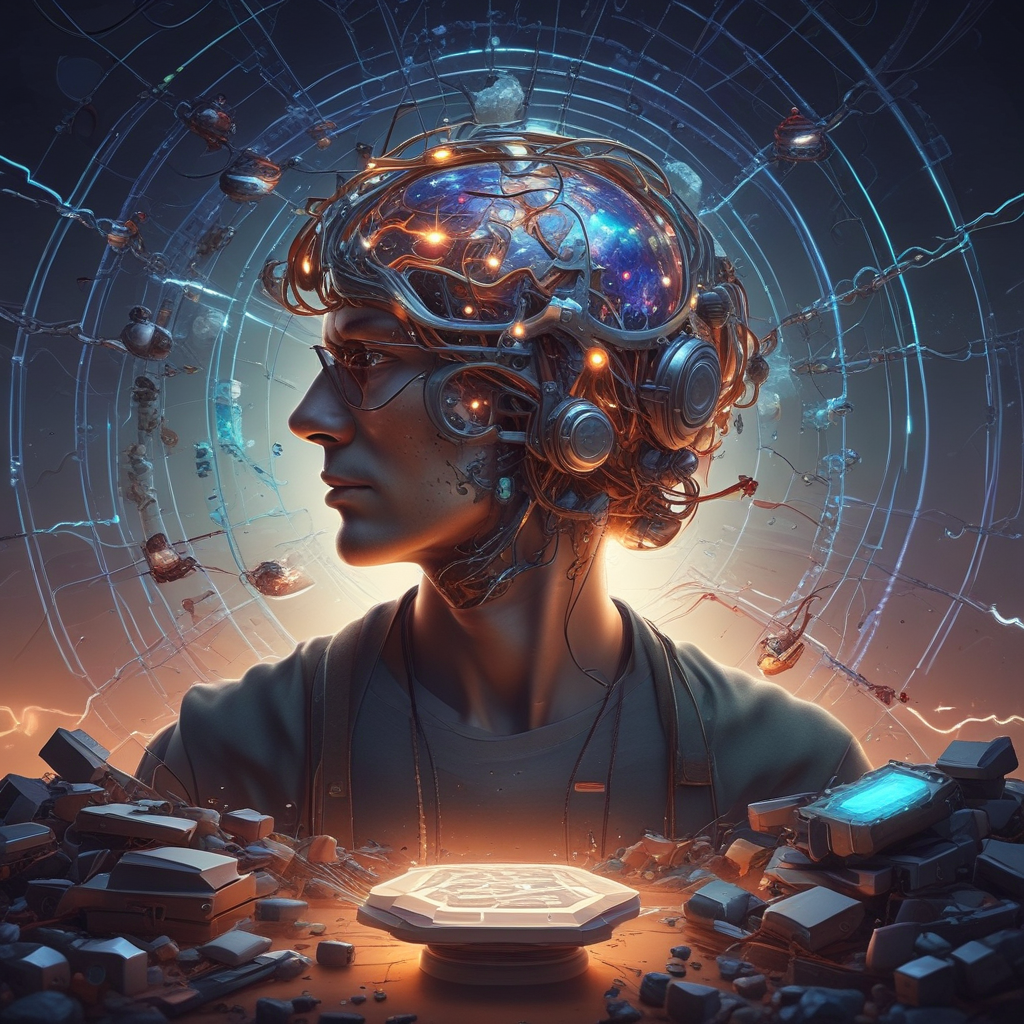 The Unity of Consciousness: Bridging Neuroscience and Philosophy - The Neuroscience of Self-Unity
The Neuroscience of Self-Unity
Implications for AI and Consciousness
The concept of unified consciousness has profound implications for the field of artificial intelligence. As AI systems become increasingly sophisticated, the question of whether they can achieve a comparable sense of self-awareness remains hotly debated.
"If the unity of consciousness is indeed a core feature of human mentality, then replicating that in AI systems may be a significant challenge," says computational neuroscientist Dr. Eliana Marroquin. "Bridging the divide between subjective experience and objective processing will be key to creating AI that is truly conscious."
As researchers continue to unravel the mysteries of the human mind, the unity of consciousness emerges as a critical area of study. By integrating insights from neuroscience, philosophy, and cognitive science, we may unlock new pathways towards a deeper understanding of consciousness - both in biological and artificial systems.
Conclusion
The unity of consciousness is a complex and multifaceted phenomenon that sits at the intersection of various academic disciplines. As the fields of neuroscience and philosophy continue to converge, the quest to understand the nature of subjective experience becomes ever more important - not just for the sake of knowledge, but for its potential to guide the development of truly conscious AI systems. The journey towards this unified understanding remains an exciting frontier for researchers and thinkers alike.
 The Unity of Consciousness: Bridging Neuroscience and Philosophy - Conclusion
Conclusion
References
-
BESIII Collaboration, M. Ablikim, M. N. Achasov et al. (2025). "Test of $CP$ Symmetry in the Neutral Decays of $Λ$ via $J/ψ\toΛ\barΛ$." arxiv. [Link]
-
Shingo Nozaki, Masahiro N. Machida (2025). "How External Medium outside Prestellar Cores Affects Protostellar Growth: Variations in Accretion Rate and Evolution of Disks and Outflows." arxiv. [Link]
-
Sebastian Grieninger, Dmitri E. Kharzeev, Eliana Marroquin (2025). "Thermal nature of confining strings." arxiv. [Link]
-
Hill CS (2018). "Unity of consciousness.." pubmed. [Link]
-
Rochat P (2019). "Self-Unity as Ground Zero of Learning and Development.." pubmed. [Link]