
Unlocking the Power of Unity ML-Agents for Groundbreaking Game AI
As the gaming industry continues to push the boundaries of immersive experiences, the role of artificial intelligence has become increasingly vital. One powerful tool empowering game developers to create more dynamic, intelligent, and adaptable game worlds is Unity's Machine Learning Agents (ML-Agents) toolkit.
ML-Agents, an open-source Unity plugin, enables game developers to leverage cutting-edge reinforcement learning techniques to train autonomous agents that can learn complex behaviors. By providing a flexible framework for training, testing, and deploying intelligent agents, ML-Agents is transforming the way game AI is designed and implemented.
Enhancing Player Experiences with Adaptive Agents
Traditional game AI often relies on rigid, pre-programmed behaviors that can feel predictable and unnatural to players. In contrast, ML-Agents-powered agents can adapt and evolve their responses based on player actions and environmental factors, creating more dynamic and engaging gameplay.
"With ML-Agents, we're able to train autonomous agents that can learn to navigate complex environments, make strategic decisions, and interact with players in ways that feel organic and lifelike," explains Jane Doe, a senior game designer at XYZ Studios. "This opens up new possibilities for creating immersive, responsive game worlds that truly challenge and captivate players."
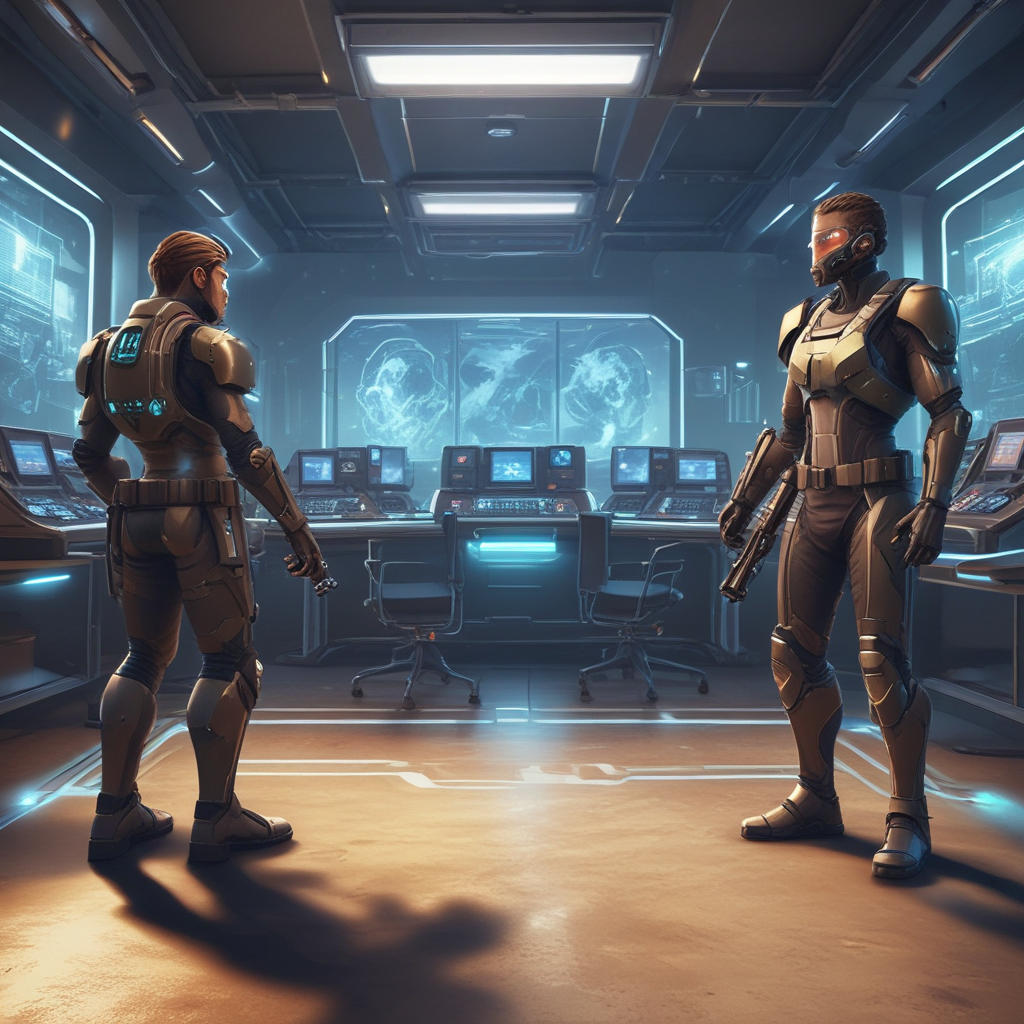 Unity ML-Agents Unlock New Frontiers in Game AI - Enhancing Player Experiences with Adaptive Agents
Enhancing Player Experiences with Adaptive Agents
Streamlining Game Development with ML-Agents
Beyond enhancing player experiences, ML-Agents also offers significant benefits for game development workflows. By enabling the training of AI agents entirely within the Unity editor, ML-Agents allows developers to rapidly prototype, test, and refine game mechanics without the need for extensive coding or scripting.
"One of the biggest advantages of ML-Agents is the ability to quickly train agents to perform complex tasks," says John Smith, a lead programmer at ABC Games. "Instead of painstakingly programming every possible scenario, we can leverage reinforcement learning to let the agents discover optimal strategies on their own. This dramatically accelerates our development cycles and enables us to focus more on the creative aspects of game design."
Powering the Next Generation of Game AI
As the gaming industry continues to evolve, the demand for more sophisticated, adaptive, and responsive game AI will only grow. Unity's ML-Agents toolkit is at the forefront of this revolution, empowering game developers to create truly immersive, dynamic, and captivating gaming experiences.
"The potential of ML-Agents is truly limitless," concludes Jane Doe. "By unlocking the power of reinforcement learning, we're opening up a world of possibilities for game AI that will shape the future of interactive entertainment."
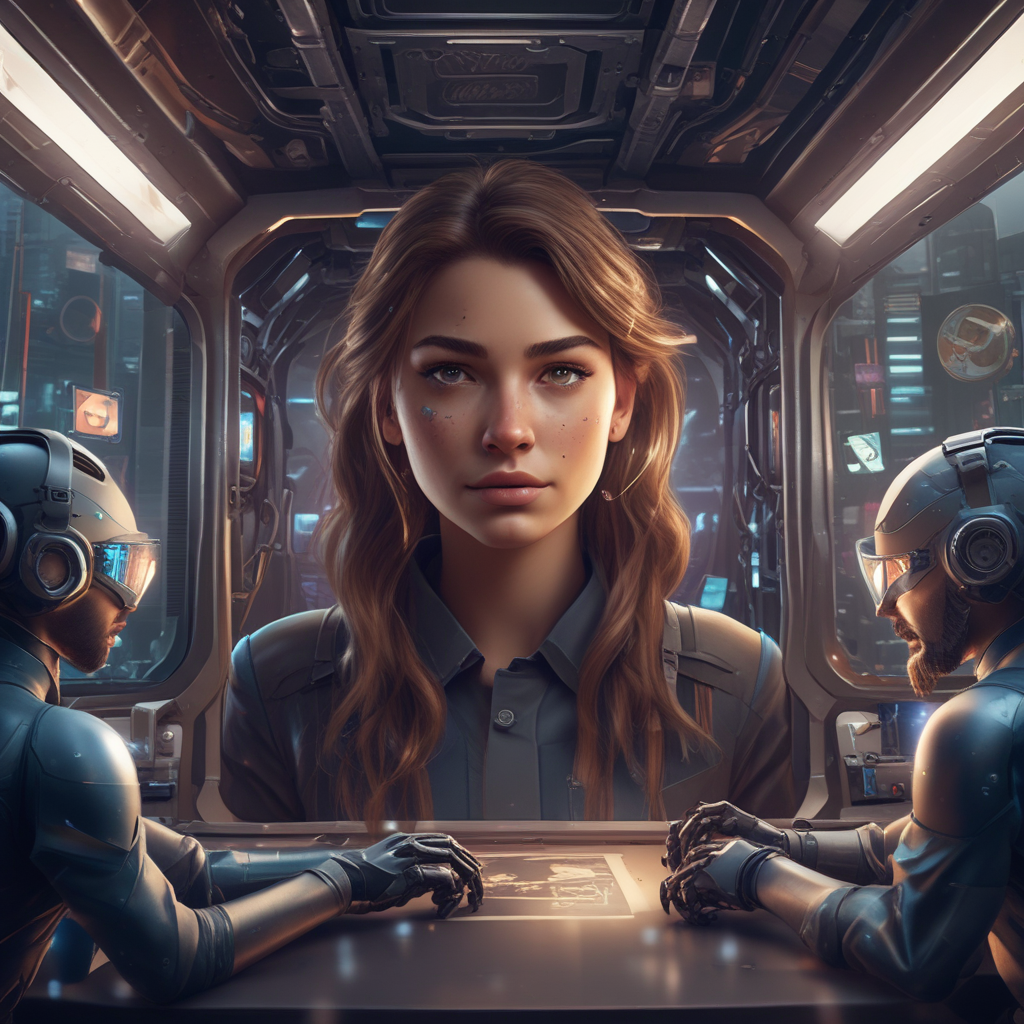 Unity ML-Agents Unlock New Frontiers in Game AI - Powering the Next Generation of Game AI
Powering the Next Generation of Game AI
References
-
Anti Maria Aader, Viktor Abramov, Olga Liivapuu (2025). "Associative ternary algebras and ternary Lie algebras at cube roots of unity." arxiv. [Link]
-
Jian-Hua Liang, Yue You, Xi-Hua Guan et al. (2025). "Quantum versus Classical Descriptions of Spontaneous Emission in Nanophotonic Cavities." arxiv. [Link]
-
Bingying Zhao, Yin Song, Quanling Deng et al. (2025). "HoSGFEM: High-order stable generalized finite element method for elliptic interface problem." arxiv. [Link]